HLD High Level Design Overview

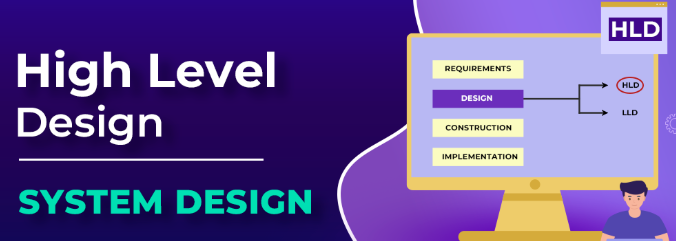
High-Level Design (HLD) for a frontend application is an overview of the application's architecture and structure. It focuses on the big picture without detailing the implementation of each component.
HLD is a phase in the Software Development Life Cycle (SDLC) where the overall architecture and structure of a software system or application are planned and documented. It bridges the gap between requirement specifications and actual implementation. The goal is to provide a blueprint or roadmap for how the system will function and how its various components will interact.
From requirement gathering to understanding users, architecture design, development, and delivery—everything is planned in HLD to ensure a smooth process without issues. In HLD, you also consider stakeholders, deployment, and third-party services.
Key Aspects of HLD
- Requirement Analysis
- System Architecture: Server, client, components, database, etc.
- Component/Module Design
- Data Design / Interfaces / API Schema
- Technology Selection
- Functional Requirements: Interaction flow
- Non-Functional Requirements: Performance, responsiveness, accessibility, SEO, offline support, caching, etc.
📌 Watch this: Cracking Frontend System Design Interview | Front-end
Remember in Interviews
- Ask questions
- Don't assume—always ask for clarifications
- Drive the interview based on the interviewer’s intent
- System design is more than just drawing boxes
- Understand functional vs. non-functional requirements
Want me to write notes on a course?
Tell me the course, book, or research topic you want covered. If it helps learners, I'll consider adding structured digital notes for it in the garden.
Have a notes collection to feature here?
Do you have open notes you want featured in this digital garden? Let me know — we can collaborate and publish them for learners worldwide.
Having a doubt? Ask a query?