
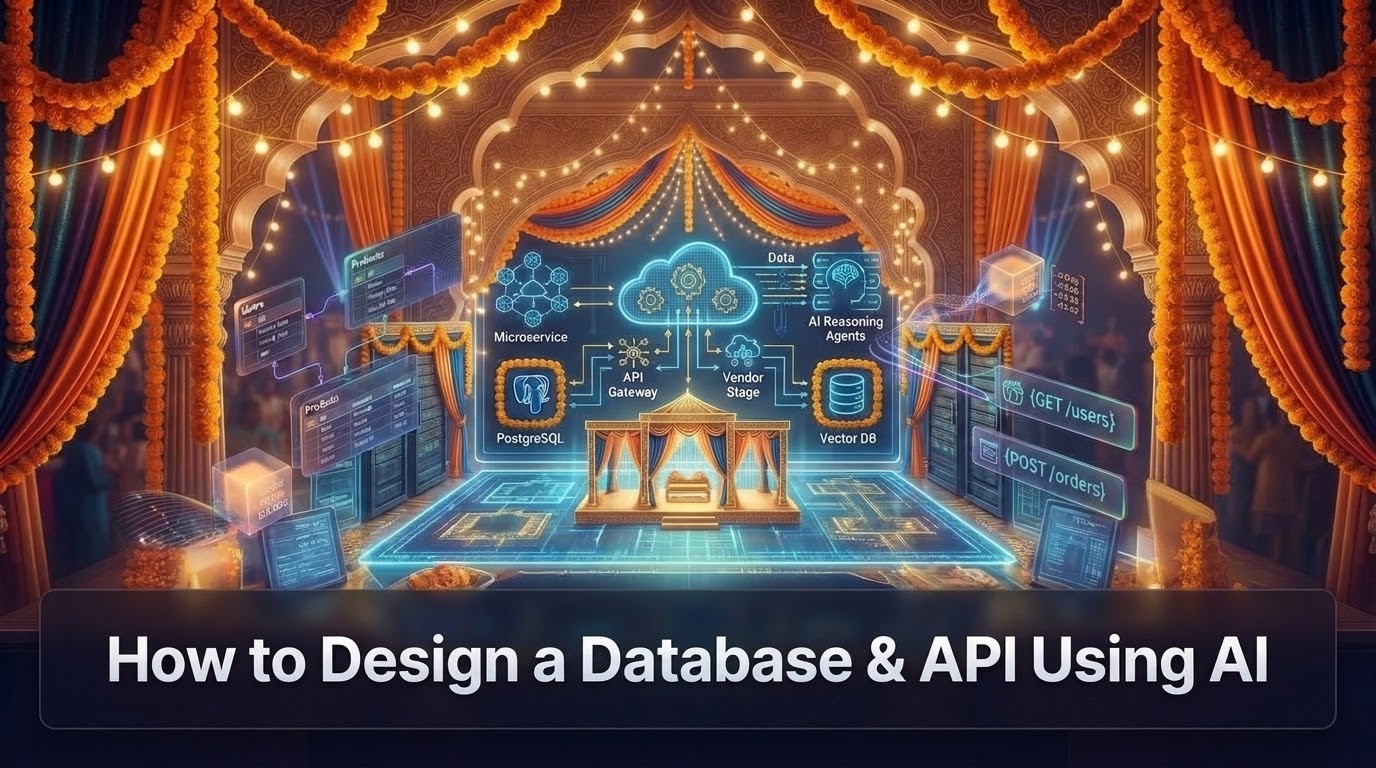
Till now, with the help of AI, we have collected and defined our PRD, and we have also defined our System Architecture, where we shortlisted the tech we will use.
Here is the System Design Architecture: Make My Marriage System Design
Here is the PRD of the Project: Make My Marriage PRD
Now let’s give a prompt without wasting any time. Let’s build the database design.
I’m giving this prompt to my ChatGPT:
All looks good, let’s build the database design doc.
Below I have attached the generated Database Design document. You can see it below.
Make_My_Marriage_Database_Design
Database Design Document
A Database Design Document (DDD) is a formal blueprint or technical guide that outlines the structure, relationships, constraints, and organization of a database system. It translates high-level business requirements into a concrete technical plan for developers and database administrators.
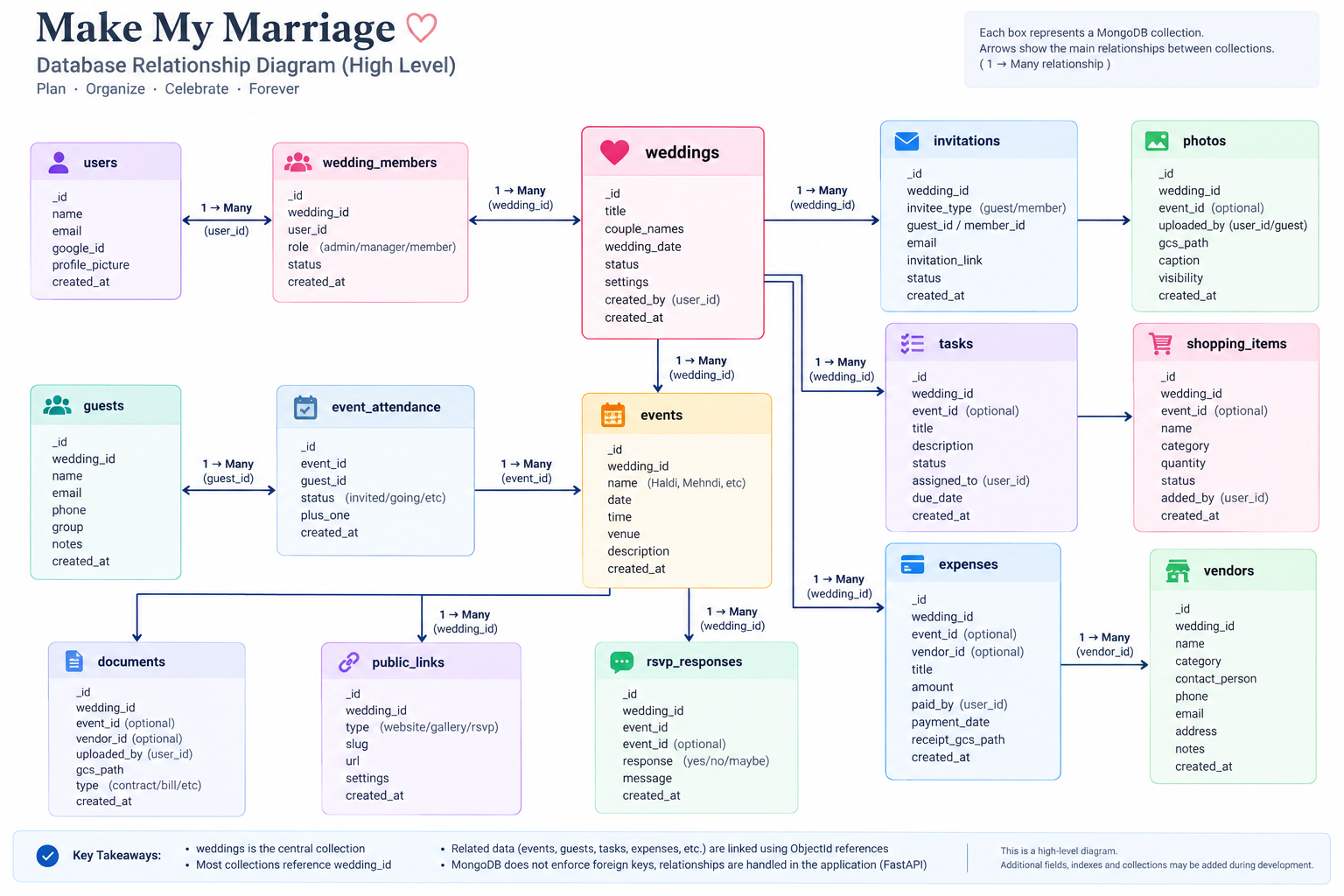
There might be mistakes, and we will change this later if required, but this is just like V1.
Here, in the above image, you can see and identify the relationship, how we have attached the DB, and while development, you will get more clarity.
And coming to the design, I’m making it very si
The database is managed around the Wedding as the main/central record. When a user creates a wedding, a wedding_id is created, and most other data such as events, guests, tasks, shopping items, expenses, vendors, photos, and documents stores this wedding_id so we always know which wedding the data belongs to. Users are connected to a wedding through wedding_members, where we store their role like Admin, Manager, or Member. Guests are stored separately in the guests collection, and when a guest is invited to a particular event, we don't create another guest—we create an event_attendance record that connects the existing guest with that event and stores their RSVP/status. Similarly, tasks, expenses, shopping items, photos, and documents can optionally connect to a specific event using event_id. Vendors are stored once for the wedding and can be connected to multiple events through vendor_event_links. Photos and documents themselves are stored in GCS, while MongoDB only stores their file path and metadata. Invitations, RSVP responses, and public links are also connected to the wedding and, where required, to a guest or event. So basically, Wedding is the main parent, wedding_id connects the data to that wedding, and specific IDs like event_id, guest_id, vendor_id, and user_id create relationships between collections. FastAPI manages and validates these relationships and permissions; MongoDB stores the actual data.
Soft delete vs hard delete in DB
In a wedding events database, a hard delete permanently erases data from the database, while a soft delete merely hides it by updating a status flag (like setting an is_deleted column to true). For example, if a couple decides to completely cancel a "Bridal Shower" event and you hard delete it, that event and all guest RSVPs attached to it are gone forever and cannot be recovered. However, if a guest named "John Doe" cancels his attendance and you soft delete his record, his data remains safely in the database but is hidden from the active guest list; this allows the wedding planner to easily restore his RSVP if he changes his mind later, and preserves the database history without breaking the links between events and guests.
So we should never hard delete anything, and this is not good development practice.
But you can decide what to delete hard and what to soft delete, because at the end, it’s your product and your expense, because the data you keep will cost you money to the provider.
Database Model Summary
The database is built around the Wedding. Each wedding gets a unique wedding_id, and this ID connects all the related data. Users are connected to weddings through wedding_members, where we store their role like Admin, Manager, or Member. Guests are stored once for the wedding, and event_attendance tells us which events each guest is attending. Events are connected to the wedding and can have their own tasks, expenses, vendors, and photos. Tasks, shopping items, expenses, vendors, invitations, photos, and documents are also connected to the wedding and, when needed, to a specific event. Photos and documents are stored in GCS, while MongoDB stores their details and file paths. Basically, Wedding is the main parent, and IDs like wedding_id, event_id, guest_id, user_id, and vendor_id connect everything together.
Now lets design the API doument
This Looks really good, lets make a API design document now
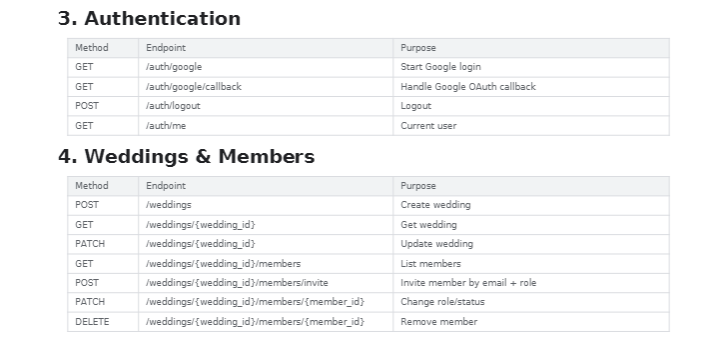
Here is the API Design Document PDF Make_My_Marriage_API_Design
That’s all for this.
This is called Specification-Driven Development (SDD) — where we first define the requirements and specifications clearly, and then use those specifications to guide the development.
I made you bored, huh? Next, we will work on some UI, and that will make you feel good.
Stay tuned, bye-bye! 👋